
But, come on: can anyone explain what need there is to organize yet another exhibition of a centenary artist like Robert Rauschenberg in this country?
In this Forbes House Art session, the auditorium hosted the lecture “But, come on: can anyone explain what need there is to organize yet another exhibition of a centenary artist like Robert Rauschenberg in this country?”, delivered by Manuel Fontán, director of the Fundación Juan March, and moderated by Lourdes Fernández.
During the session, Fontán reflected on the continued relevance of Robert Rauschenberg and the reasons that make organizing exhibitions dedicated to his work still pertinent. Considered a key figure in the history of twentieth-century art, Rauschenberg played a fundamental role in the transition between abstract expressionism and pop art, opening new avenues for contemporary artistic practice.
The lecture addressed the way in which the artist incorporated photographic images, everyday materials and mixed techniques into his creations, blurring the boundaries between disciplines and expanding the possibilities of artistic language. In his works, painting, photography and found objects coexist as elements of a single visual reality, anticipating many of the concerns of contemporary art.
The session offered an approach to Rauschenberg’s legacy and the influence his work continues to exert on the current artistic landscape.


Woman, Art and Clay in Black Africa
The relationship between women, clay and artistic creation in sub-Saharan Africa was the central focus of the lecture “Woman, Art and Clay in Black Africa”, delivered by Marga Sánchez, collector, in a new Forbes House Art session.
Throughout her talk, Sánchez explored the fundamental role that women have historically played in the African pottery tradition, a practice closely linked to artistic production, as well as to the transmission of knowledge, beliefs and the social organization of numerous communities. Through archaeological, historical and anthropological examples, the speaker highlighted the relevance of women as creators and custodians of one of the most widespread artistic expressions on the continent.
The lecture also addressed the myths, symbols and taboos associated with clay and the female figure in different African cultures, analyzing how pottery has been linked to concepts such as fertility, the creation of life and community balance. In this context, Sánchez reflected on the limitations traditionally imposed on women, as well as on the symbolic importance attributed to them within these cultural systems.
The Capacity of Contemporary Art as Social Transformation
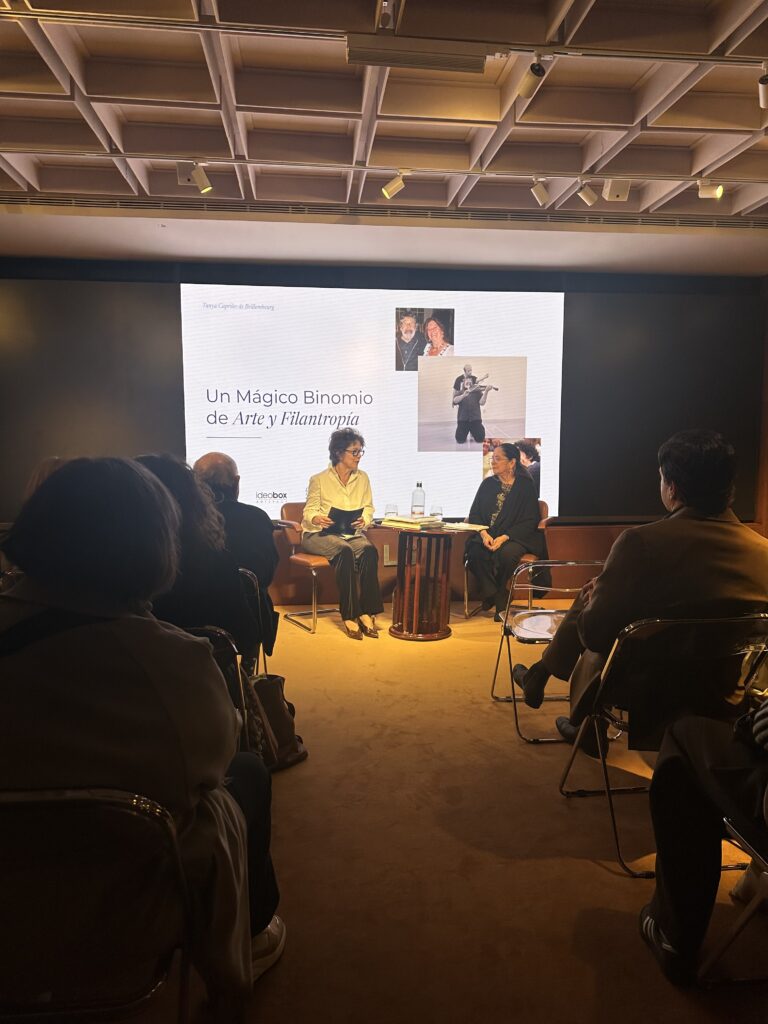
In this Forbes House Art session, the auditorium hosted the talk by Tanya Capriles Brillembourg, renowned collector and art promoter, who shared her thoughts on the role of art as a tool for social transformation.
Drawing on her own experiences and her extensive career in the art world and collecting, Capriles Brillembourg approached art as a space for aesthetic experimentation and as a medium capable of generating critical thinking, fostering new forms of relationship and promoting active engagement with the present.
During the session, she highlighted the potential of collecting as a practice that transcends the private sphere to become a form of support for contemporary creation. She also underlined its capacity to give visibility to emerging discourses, drive the work of artists and contribute to the building of communities around art.
The talk offered a close and personal perspective on the relationship between art, collecting and social responsibility, highlighting the role that both can play in shaping a more critical and participatory society.